Trucking (TIR international road transport) is the stable corridor between air and rail — cheaper than air, faster than sea, with a single carnet covering the whole journey and no container unstuffing en route. We turn every leg from the South and East China factory door to the Moscow or European warehouse door into a standard procedure: domestic linehaul, vehicle matching, border reloading, securing and lashing, overseas capacity and contingency plans.
Taking the Alashankou exit as an example, a trucked consignment from a domestic factory to an overseas door point passes through four operational stages, each with defined working standards, transit commitments and risk controls.
Starting in South, East or Central China, running entirely on expressways to the Xinjiang border in a standard 4-7 days, with GPS monitoring throughout.
Reloaded at the border onto international TIR vehicles, with a single TIR carnet covering the whole route and linehaul through Kazakhstan and Russia.
Customs declaration, reloading, sealing and bonded-area operations, supervised throughout by our on-site staff, with a 1-3 day clearance buffer.
Overseas customs clearance and unloading, with seal verification and photos plus signed receipts sent back, and full tracking available.
Recommended routes and transit times are matched to the origin city, with all cargo routed to Alashankou for consolidated handling.
| Origin city | Recommended route | Distance | Standard transit |
|---|---|---|---|
| Fuqing / Xiamen | Shenhai Expressway → Lianhuo Expressway → Jingxin Expressway | 4,700 km | 5-6 days |
| Wuhan | Fuyin Expressway → Lianhuo Expressway → Jingxin Expressway | 3,800 km | 4-5 days |
| Shenzhen / Dongguan | Beijing-Hong Kong-Macau Expressway → Lianhuo Expressway → Jingxin Expressway | 4,800 km | 6-7 days |
Roads in the northwest are affected by rain, snow, fog and sandstorms, overload checkpoints in some provinces can cause short queues, and vehicle breakdowns on long runs are the main risk. We plan routes and backup vehicles in advance according to season and road conditions.
Use fully enclosed box trucks or wing-body trucks in good condition; the cargo area must be dry, clean and odour-free. Vehicles with air suspension are preferred to protect cargo quality.
Vehicles are monitored by GPS with geofencing and over-speed alerts; reliable fleets and drivers are strictly screened, and driving and rest hours are regulated to keep transport safe.
The main trucking vehicle types are box trucks and reefers, matched to cargo characteristics, volume, weight and temperature requirements, with loading efficiency well above standard containers.
| Item | Length L | Width W | Height H |
|---|---|---|---|
| External dimensions | 14,000 mm | 2,550 mm | 3,100 mm |
| Internal dimensions | 13,600 mm | 2,460 mm | 2,950 mm |
| Max payload | 22 T | ||
| Max volume | 98 m³ | ||
| Item | Length L | Width W | Height H |
|---|---|---|---|
| External dimensions | 13,916 mm | 2,550 mm | 3,800 mm |
| Internal dimensions | 13,300 mm | 2,450 mm | 2,550 mm |
| Max payload | 21.5 T | ||
| Max volume | 83 m³ | ||
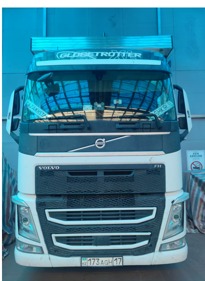
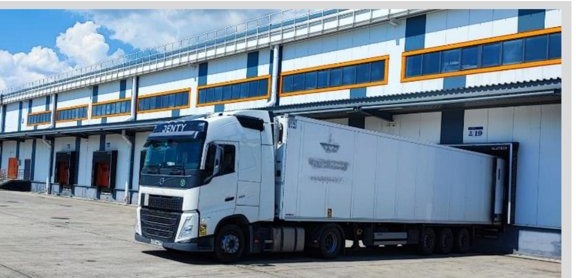
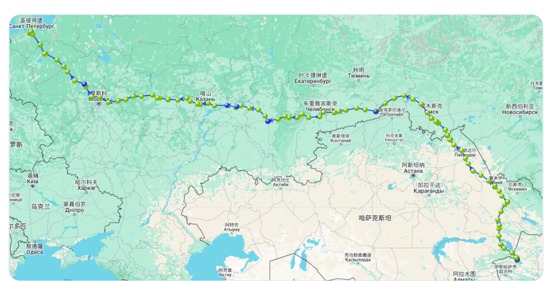
The Russia and Europe corridors run in parallel, both exiting via Alashankou and transiting Kazakhstan. Transit times are normal averages and exclude occasional queues at the border.
| Transit days | Alashankou | Moscow | St. Petersburg |
|---|---|---|---|
| Alashankou | — | 6 | 7 |
| Moscow | 6 | — | 1 |
| St. Petersburg | 7 | 1 | — |
Routing: Alashankou → Dostyk → Pavlodar → Omsk → Moscow → St. Petersburg.
Transit notes: Exit at Alashankou includes 1 day for customs and reloading; Dostyk includes 1 day for transit formalities; the China-Russia leg is calculated at 700 km/day ; the route transits Kazakhstan via Pavlodar. Figures are average transit times and exclude unforeseeable delays.
| Transit days | Alashankou | Minsk | Warsaw | Hamburg |
|---|---|---|---|---|
| Alashankou | — | 7 | 8 | 10 |
| Minsk | 7 | — | 1 | 3 |
| Warsaw | 8 | 1 | — | 2 |
| Hamburg | 10 | 3 | 2 | — |
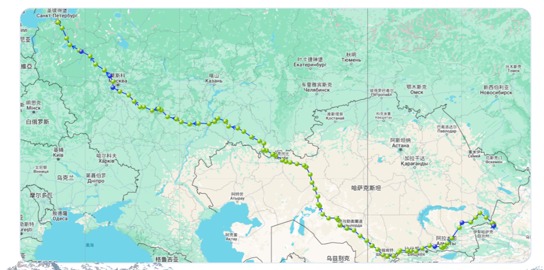
Routing: Alashankou → Dostyk → Almaty → Shymkent → Aktobe → Orenburg → Moscow → St. Petersburg, extending towards Europe via Minsk / Warsaw to Hamburg.
Transit basis: Exit at Alashankou includes 1 day for customs and reloading and Dostyk 1 day for transit formalities; the China-Europe leg is calculated at 700 km/day in CIS countries and 600 km/day within Europe; the route transits KZ, RU and BY (via Brest); the Polish-Belarusian border normally involves 5-7 days of queuing, while trailers on KZ or UZ plates can enter Europe via Lithuania / Latvia and benefit from customs escort.
Alashankou is our most mature border operation, with a full set of in-house or long-term partner resources for declaration, reloading, sealing and bonded-area work.
Chinese export formalities are handled by experienced, well-regarded brokers at Alashankou.
Declaration documents (invoice / packing list / contract / customs declaration, any required licences / EAC, transport documents, insurance policy) are prepared in advance, with description, HS code, quantity, value and brand/model checked item by item; electronics face higher documentation requirements.
Electronic pre-declaration is filed as early as possible to shorten on-site waiting.
Loading, unloading and securing are carried out according to cargo characteristics and customer requirements, strictly following on-site working standards.
Clearance times are highly uncertain, so plans should allow 1-3 daysfor border clearance.
If congestion at the border is severe, reloading and exit can be switched to other Xinjiang borders (Bakhty / Jeminay / Khorgos and others).
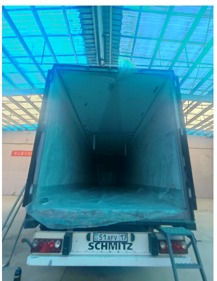
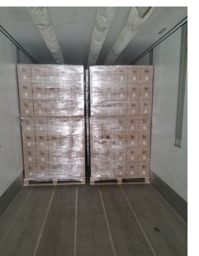
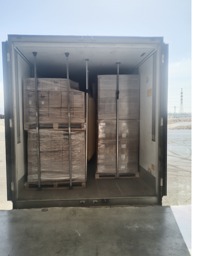
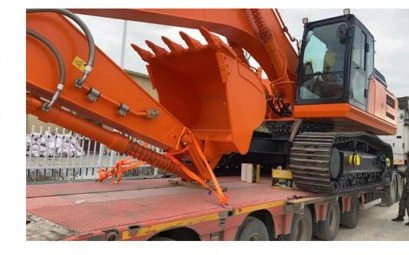
Cross-border road transport involves complex road conditions and multiple reloading steps, so securing is the first line of defence for cargo safety. We work to the EN 12642 standard and determine the lashing plan from the cargo's centre of gravity and load calculations.
| Vehicle standard | Front wall strength | Side wall strength | Application |
|---|---|---|---|
| EN 12642 L | 40% of payload, max 5,000 daN | 25% of payload, max 3,100 daN | Standard box truck, suited to ordinary palletised and boxed cargo |
| EN 12642 XL | 50% of payload | 30% of payload | Reinforced body, suited to heavy, irregular and high-value equipment |
Before loading, lashing forces are calculated from cargo weight, centre of gravity and bearing area to determine strap rating and the number of lashing points; cargo at risk of tipping forward gets additional front-wall bracing and blocking.
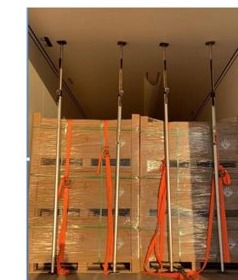
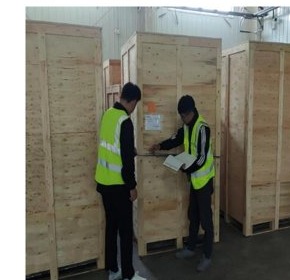
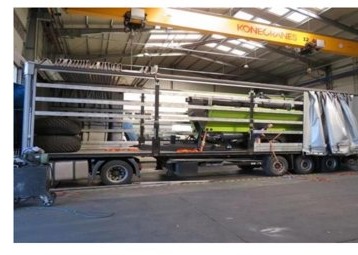
Overseas clearance is handled jointly by local partner brokers and our overseas colleagues; at delivery the seal is verified, pieces are counted and on-site images are retained.
Before arrival, dispatch confirms the ETA and unloading requirements with the consignee; once the vehicle arrives,first check that the seal number matches the transport documents, and only then is the seal broken and unloading started. Any anomaly during unloading (damaged outer packaging, water damage, piece-count discrepancy) is recorded on the spot by the driver and consignee and reported to us immediately as the basis for later liability assessment.
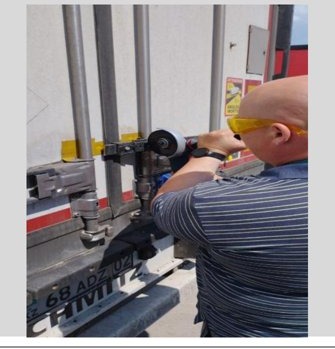
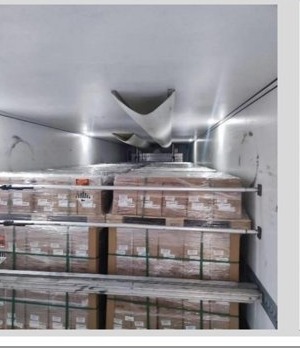
Controllability on the overseas leg is what separates good trucking services from the rest. We run daily controls across four dimensions: monitoring, vehicles, routes and transit times.
Satellite monitoring throughout, covering Kazakhstan and Russia, with position available at any time.
We work with international carriers or long-term local fleet partners that have deep experience, reliable networks and strong reputations in Kazakhstan and Russia; their drivers know the routes, clearance procedures, local regulations and safety requirements.
Routes are planned in advance based on road conditions, overseas weather and fleet feedback, avoiding known problem sections.
Strict milestone times are set, transit is visible throughout and generous buffers are allowed for border uncertainty.
We reaffirm the requirements for enclosed bodies, clean and dry interiors and good suspension, use box trucks in good condition (Euro 4/5 or better) suited to long hauls, and check vehicle safety equipment.
The international-leg seal is applied after loading in China and stays intact until the overseas destination warehouse opens it; the seal number is recorded and handover documented.
All overseas trucks have air suspension, and after reloading the securing is re-checked item by item against the cargo characteristics.
Drivers are required to rest only in safe, guarded truck parks or service areas.
The value of trucking is not just getting there — it is knowing what to do when something goes wrong. Standardised contingency plans cover the six situations below.
In peak season or on urgent orders, what counts is the reserve of overseas vehicles and local support capability.
Long-term or framework agreements with core carriers give priority capacity.
200+ carriersin our list of reliable backup carriers, ready to supply extra vehicles at any time.
We have offices and overseas colleagues at key points in Kazakhstan and Belarus for emergency support, plus offices in Almaty and Istanbul.
Use box trucks in good condition (Euro 4/5 or better) suited to long hauls and check safety equipment before departure.
When exceptional weather makes exit at Alashankou or vehicle handover difficult, cargo can exit via Jeminay, Bakhty or Khorgos; our own staff supervise operations on site at the other borders.
Cargo insurance fully covers both the domestic and international legs, taken out per shipment with the policy delivered alongside the documents.
Cover extends across the domestic and international legs,including risks within Kazakhstan and Russia, with adequate insured amounts. The exclusions below are standard market terms and should be confirmed before cover is placed: Institute Radioactive Contamination, Chemical, Biological, Biochemical and Electromagnetic Weapons Exclusion Clause; Institute Cyber Attack Exclusion Clause; sanctions exclusion; communicable disease exclusion.
From order to settlement, three roles work in the same system and the customer can check cargo status at any time.
Customer service creates the work order in the system and cascades the requirement to the responsible staff; work order type (export/import), linked waybill, container type and quantity, and the assigned agent are all recorded.
The operations team retains the document for every milestone (booking, stuffing, departure, arrival, release and so on), and the waybill timeline is fully traceable.
The billing team can export the settlement details directly from the system, with each charge mapped to the milestone where it arose — reducing reconciliation disputes.
Send us origin, destination and cargo pieces, weight and dimensions and we will reply within 24 hours with a trucking plan, transit time and quotation.
Business & enquiries:samuel.chen@dream-logistics.tech